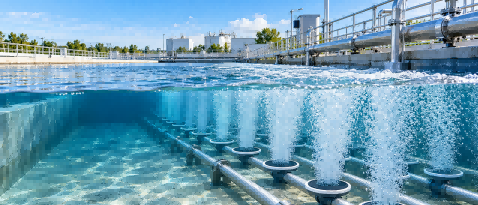
A fine bubble diffuser for wastewater treatment improves oxygen transfer, supports biological treatment and helps reduce unnecessary aeration energy. This guide explains how fine bubble diffusers work and how to select the right disc, tube or retrievable aeration system.
However, aeration can also be one of the largest energy-consuming processes in a wastewater treatment plant. An inefficient wastewater aeration system may cause uneven dissolved oxygen distribution, excessive blower operation, unstable biological treatment and higher operating costs.
For municipal and industrial plants seeking better oxygen transfer and lower energy consumption, a properly designed fine bubble diffuser system can provide an effective solution.
What Is a Fine Bubble Diffuser?
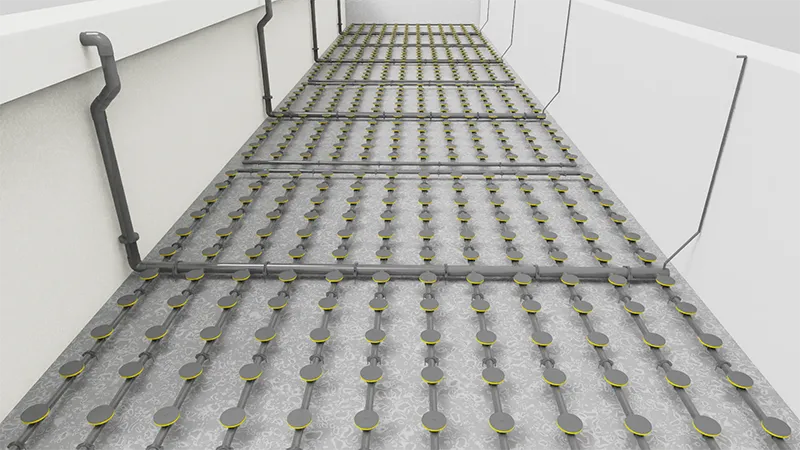
A fine bubble diffuser is an aeration device installed inside a biological treatment tank. Compressed air passes through small openings in the diffuser membrane and forms numerous fine bubbles in the wastewater.
Compared with larger bubbles, fine bubbles provide a greater gas-to-liquid contact area and generally remain in the water longer. These characteristics help transfer oxygen from the air into the wastewater more efficiently.
Fine bubble aeration systems are commonly used in:
- Municipal wastewater treatment plants
- Industrial wastewater treatment plants
- Activated sludge processes
- A²/O and oxidation ditch processes
- Sequencing batch reactors
- MBBR and IFAS systems
- Wastewater treatment plant expansion and retrofit projects
Why Oxygen Transfer Efficiency Matters
In an activated sludge system, microorganisms depend on dissolved oxygen to remove biodegradable pollutants. If oxygen transfer is insufficient, the treatment process may experience poor pollutant removal, unstable nitrification or undesirable biological conditions.
Supplying more air is not always the best solution. Excessive aeration can waste energy and increase operating costs without producing a proportional improvement in treatment performance.
The objective of aeration system design is therefore to deliver the required amount of oxygen efficiently and distribute it evenly throughout the biological tank.
Fine bubble diffusers support this objective by producing small bubbles with a high surface-area-to-volume ratio. The actual performance of the system, however, depends on more than bubble size alone. Water depth, diffuser density, airflow, wastewater characteristics, membrane condition and tank geometry must all be considered.
Fine Bubble Disc Diffuser vs. Fine Bubble Tube Diffuser
Two common types of aeration equipment are fine bubble disc diffusers and fine bubble tube diffusers. Both can provide efficient oxygen transfer, but they are suited to different installation conditions.
Fine Bubble Disc Diffusers
A fine bubble disc diffuser uses a circular membrane mounted on a diffuser support body. Multiple units are normally arranged across the tank floor to create uniform aeration coverage.
Disc diffusers are often selected for:
- New wastewater treatment plants
- Fixed-grid aeration systems
- Municipal activated sludge tanks
- Projects requiring broad floor coverage
- Installations designed for uniform air distribution
Their modular layout allows engineers to adjust diffuser quantity and density according to the oxygen demand of different treatment zones.
Fine Bubble Tube Diffusers
A fine bubble tube diffuser uses an elongated membrane installed around a tubular support structure. Its larger active aeration area can make it suitable for a range of municipal and industrial applications.
Tube diffusers are often considered for:
- Long or narrow aeration tanks
- Retrofit projects
- MBBR and IFAS applications
- Installations requiring flexible diffuser arrangements
- Systems with specific mixing and oxygen-transfer requirements
The correct choice should be based on process conditions rather than diffuser shape alone.
Key Factors in Selecting a Wastewater Aeration System
1. Required Oxygen Demand
The aeration system must satisfy the actual oxygen demand of the biological process. Important inputs include wastewater flow, BOD or COD load, ammonia load, treatment targets and peak operating conditions.
Designing only around average flow can result in insufficient capacity when the plant experiences peak loads.
2. Tank Dimensions and Water Depth
Tank length, width, shape and operating water depth affect diffuser layout and oxygen-transfer performance. Greater water depth can increase bubble contact time, but the blower must also overcome additional static pressure.
Existing tanks should be carefully assessed before a retrofit design is finalized.
3. Wastewater Characteristics
Municipal sewage and industrial wastewater can behave very differently. Oils, suspended solids, scaling compounds, chemicals and high salinity may influence membrane performance and fouling risk.
For industrial wastewater treatment, material compatibility must be reviewed against the actual wastewater composition.
4. Diffuser Membrane Material
EPDM is widely used for wastewater aeration because of its flexibility and suitability for many municipal applications. Other membrane materials may be considered when the wastewater contains oils, solvents, aggressive chemicals or substances that could affect conventional membranes.
Material selection should be based on operating conditions and compatibility—not price alone.
5. Airflow Range
Each aeration diffuser has an appropriate operating airflow range. Operating too far above the recommended range may create larger bubbles, increase pressure loss and reduce oxygen-transfer efficiency.
Operating at an unsuitable low airflow may also lead to uneven distribution or insufficient mixing. The blower, piping and diffusers should therefore be designed as one integrated system.
6. Pressure Loss
Diffuser pressure loss affects the total pressure the blower must supply. Fouling, membrane aging, undersized piping or poor air distribution can increase system resistance and energy consumption.
Evaluating pressure across the complete aeration system is essential when selecting equipment or diagnosing an inefficient installation.
7. Maintenance and Tank Accessibility
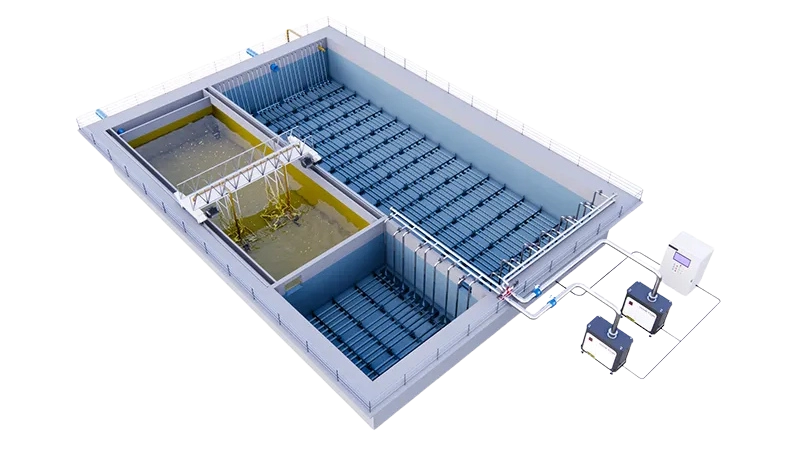
A conventional fixed-grid system may require tank drainage for inspection or diffuser replacement. When shutdowns are difficult, a retrievable aeration system may allow sections of the equipment to be accessed with less interruption to plant operation.
Maintenance strategy should be considered during the initial design stage rather than after installation.
Common Signs of an Inefficient Aeration System
Wastewater treatment plant operators should investigate the aeration system when they observe:
- Uneven bubbling across the tank
- Low dissolved oxygen in specific biological zones
- Rapidly increasing blower pressure
- Higher energy consumption without increased treatment capacity
- Large or irregular bubbles
- Frequent diffuser clogging
- Unstable ammonia removal
- Dead zones or insufficient tank mixing
- Damaged or hardened diffuser membranes
These symptoms do not always mean that the diffuser itself has failed. Problems may also originate from air piping, control valves, blower selection, condensate accumulation, fouling or an unsuitable diffuser layout.
A complete system assessment is more useful than replacing individual components without identifying the underlying cause.
How Fine Bubble Aeration Can Reduce Operating Costs
The largest potential saving normally comes from improving oxygen-transfer efficiency and avoiding unnecessary airflow.
An optimized wastewater aeration system can help a plant:
- Deliver more oxygen per unit of supplied air
- Reduce unnecessary blower output
- Improve dissolved oxygen distribution
- Support stable biological treatment
- Increase capacity within an existing tank footprint
- Reduce maintenance caused by uneven system loading
Fine bubble diffusers should not be treated as isolated products. Their performance depends on the interaction between the blower, piping network, control strategy, diffuser arrangement and biological process.
New Installation or Aeration System Retrofit?
For a new wastewater treatment plant, engineers can design the diffuser density, piping layout, blower capacity and control strategy together.
A retrofit project requires a different approach. The design team must first understand the existing tank structure, process limitations, available blower capacity and shutdown restrictions.
Typical retrofit objectives include:
- Replacing aging or damaged diffusers
- Converting from coarse bubble or mechanical aeration
- Increasing treatment capacity
- Improving ammonia removal
- Correcting uneven oxygen distribution
- Reducing blower energy consumption
- Upgrading the plant without constructing new tanks
Where draining the tank is impractical, retrievable aeration assemblies may provide an alternative to a permanently fixed installation.
How HINKTON Supports Wastewater Aeration Projects
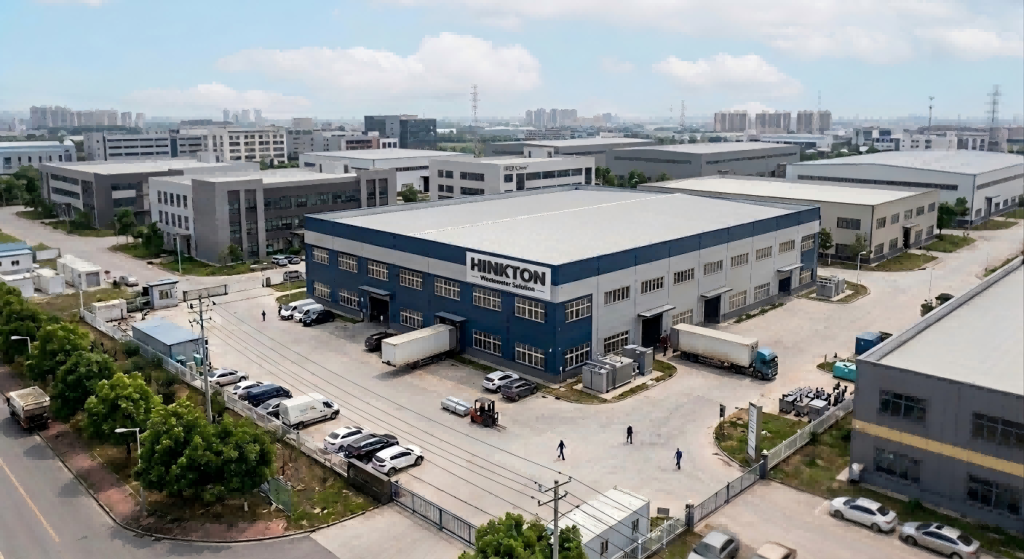
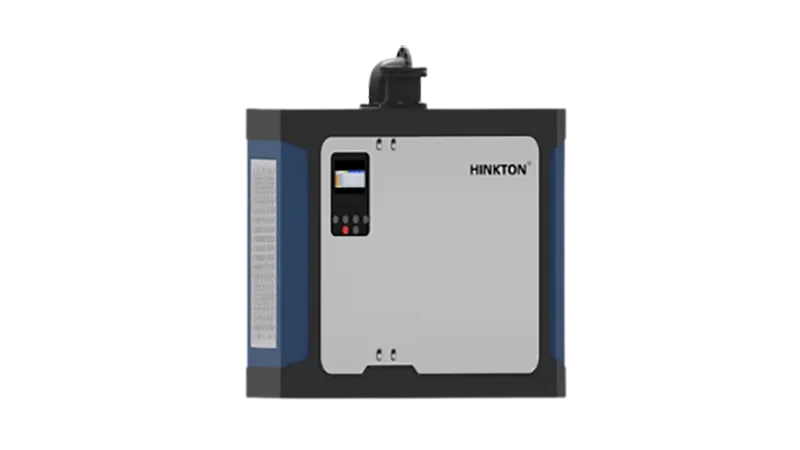
HINKTON provides fine bubble aeration solutions for municipal and industrial wastewater treatment applications.
Its product and system range includes:
- Disk-X® fine bubble disc diffusers
- Aerts-X® fine bubble tube diffusers
- Retro-X® retrievable aeration systems
- MBBR and biofilm systems
- Aeration system engineering and optimization
- Customized diffuser arrangements for project-specific conditions
With more than 20 years of manufacturing experience and applications across thousands of wastewater projects, HINKTON supports EPC contractors, engineering companies and treatment plant operators from equipment selection through project implementation.
Project assessment may include tank configuration, water depth, wastewater characteristics, oxygen demand, existing air distribution and maintenance requirements.
Information Needed for Aeration System Selection
To receive a more accurate technical proposal, prepare the following information:
- Wastewater type and application
- Average and peak flow rate
- Tank dimensions and water depth
- BOD, COD and ammonia concentrations
- Required effluent standard
- Treatment process
- Existing blower capacity and pressure
- Existing diffuser type and quantity
- Operating temperature
- Known chemical, oil or salinity conditions
- Project drawings or installation photographs
- Shutdown and maintenance limitations
The more complete the operating data, the more accurately the aeration system can be sized.
Conclusion
A fine bubble diffuser can improve oxygen transfer, but the best results come from a complete aeration-system design based on the biological process and actual site conditions.
Disc diffusers, tube diffusers and retrievable aeration systems each have suitable applications. The right solution should balance oxygen demand, tank geometry, airflow, pressure loss, wastewater characteristics, maintenance requirements and long-term energy use.
If you are planning a new municipal or industrial wastewater treatment plant—or upgrading an existing aeration system—HINKTON can evaluate your project conditions and recommend an application-based solution.
Contact HINKTON to discuss your wastewater aeration project and request a technical proposal.