
Introduction to Precision Aeration Control
Precision aeration control is used to match air supply with the actual oxygen demand of a biological wastewater treatment process.
Instead of operating blowers and air valves at fixed settings, the system uses real-time process data such as dissolved oxygen, airflow, MLSS and influent conditions to adjust aeration according to changing treatment needs.
The main purpose is simple:
Supply enough air for stable biological treatment, while avoiding unnecessary aeration and energy waste.
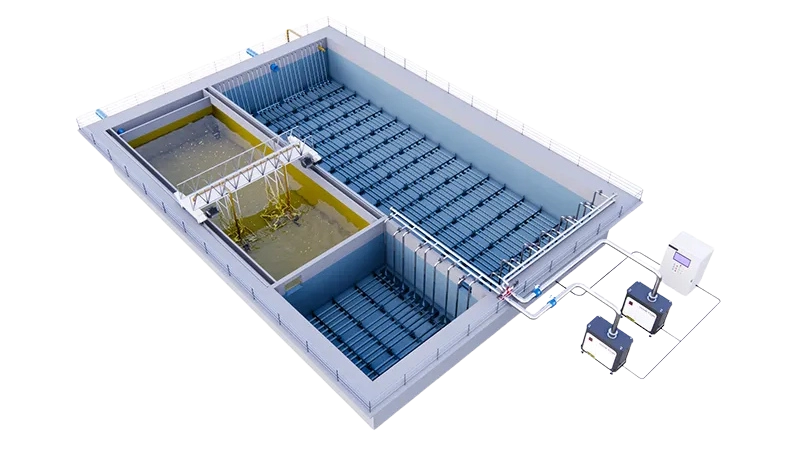
A typical precision aeration control system may include airflow meters, DO sensors, MLSS instruments, electric air control valves, PLC control equipment and process calculation software.
Advantages of Precision Aeration Control
Precision aeration control can provide several practical benefits for wastewater treatment plants.
Better Airflow Distribution
Different aeration zones may have different oxygen requirements.
By monitoring branch airflow and controlling individual air valves, the system can distribute air more accurately across the biological tank.
This helps reduce situations where one zone receives too much air while another receives too little.
More Stable Dissolved Oxygen Control
DO levels can change with influent loading, biological activity and operating conditions.
Precision control allows airflow to follow these changes, helping maintain more stable dissolved oxygen conditions during operation.
Lower Unnecessary Blower Energy Use
Aeration is one of the major energy consumers in a wastewater treatment plant.
When oxygen demand decreases, reducing airflow and blower output can help avoid excessive aeration.
The actual energy-saving result depends on the existing plant, blower system and operating conditions.
Improved Process Visibility
By combining data from DO, airflow, MLSS and other operating parameters, plant operators can better understand biological treatment conditions and make more informed operating decisions.
Better Support for Variable Loads
Wastewater flow and pollutant loading are rarely constant.
A dynamic aeration control strategy can respond more effectively to changing treatment loads than fixed airflow operation.
Limitations and Considerations of Precision Aeration Control
Precision aeration control is not simply a software upgrade.
Its performance depends on several parts of the aeration system working together.
Instrument Reliability
DO, airflow and MLSS instruments need to provide stable and accurate data.
Poor sensor condition can affect control accuracy.
Blower Regulation Capability
The blower system must be able to respond to changing airflow requirements.
If blower turndown is limited, the control system may not be able to fully realize its optimization potential.
Air Valve Performance
Control valves must have sufficient adjustment accuracy and repeatability to regulate branch airflow effectively.
Existing Aeration System Condition
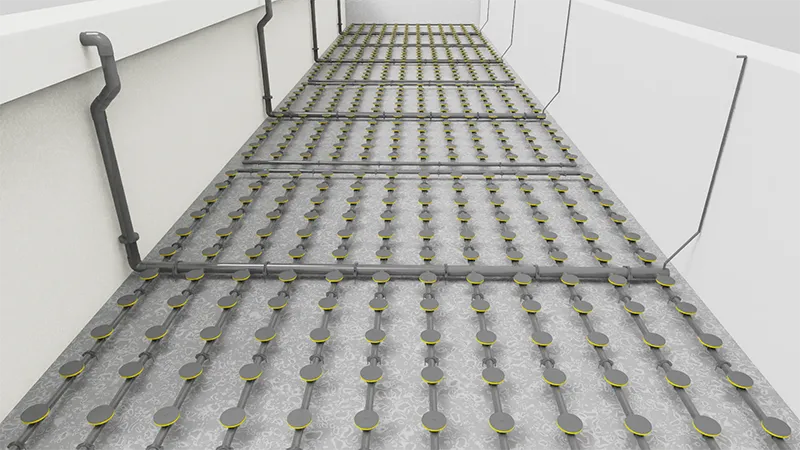
If diffusers are severely aged, blocked or poorly distributed, control optimization alone may not solve the aeration problem.
In this case, the diffuser system may also need to be upgraded.
Project-Specific Commissioning
Each wastewater treatment plant has different tank configurations, wastewater characteristics and operating patterns.
For this reason, precision aeration control normally requires project-specific evaluation and commissioning.
Main Components of a Precision Aeration Control System
A complete system may include the following:
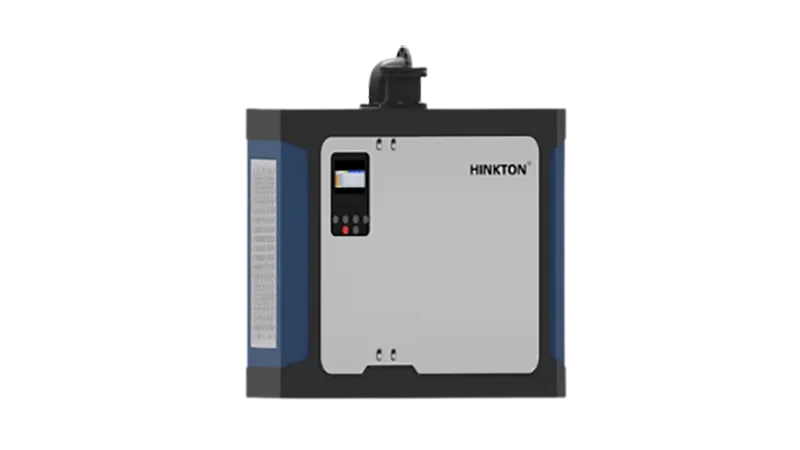
PLC Control System
Used for control logic, communication and real-time calculation.
Dissolved Oxygen Sensors
Used to monitor oxygen conditions in biological treatment zones.
Airflow Meters
Used to measure total and branch airflow.
MLSS Instruments
Used to monitor sludge concentration and support biological process evaluation.
Electric Air Control Valves
Used to adjust airflow to individual aeration zones.
Blower Control Interface
Used to adjust total airflow according to calculated aeration demand.
Process Calculation Software
Used to analyze operating data and calculate airflow targets.
Fixed Aeration vs Precision Aeration Control
The main difference is how air supply is determined.
Fixed Aeration
Airflow is mainly based on preset operating conditions or manual adjustment.
This approach is simple, but it may not respond well to changing wastewater loads.
Precision Aeration Control
Airflow is adjusted according to real-time biological treatment conditions.
The system calculates required airflow for different zones and coordinates blower output and valve positions accordingly.
In simple terms:
Fixed aeration supplies air based on settings.
Precision aeration supplies air based on process demand.
When Is Precision Aeration Control Suitable?
Precision aeration control is particularly useful for wastewater treatment plants with:
- Multiple aeration zones
- Variable influent loads
- High blower energy consumption
- Uneven DO distribution
- Large biological treatment tanks
- Existing plants undergoing aeration optimization
- Requirements for more stable biological operation
It can be applied to both municipal and industrial wastewater treatment plants.
Precision Aeration Control and Aeration System Optimization
Control performance depends on the condition of the aeration system itself.
Efficient diffusers, balanced pipework and suitable blower pressure are still important.
For this reason, HINKTON evaluates precision aeration control together with the aeration system, rather than treating control software as an isolated solution.
Depending on project conditions, optimization may involve:
- Airflow distribution assessment
- Diffuser selection
- Existing blower evaluation
- DO control strategy
- Branch airflow control
- Aeration system retrofit
Conclusion
Precision aeration control helps wastewater treatment plants move from fixed air supply toward demand-based aeration.
By combining online monitoring, airflow control and blower regulation, the system can support more stable biological treatment and reduce unnecessary aeration.
For existing plants, the best results usually come from evaluating the control system and the physical aeration system together.