
Improving Oxygen Distribution, Treatment Stability and Energy Efficiency Through Optimized Aeration Solutions
Project Background
Aeration system optimization plays an important role in improving oxygen distribution, treatment stability and energy efficiency in large municipal wastewater treatment plants.
Large municipal wastewater treatment plants usually operate with complex biological treatment systems, multiple treatment lines and centralized blower systems.
As treatment capacity increases, aeration management becomes more challenging.
Different biological zones have different oxygen requirements, while influent flow and pollutant loading continuously change throughout daily operation.
For many existing wastewater treatment plants, the aeration system was originally designed based on fixed operating conditions.
However, during long-term operation, actual plant conditions may change due to:
- Increased wastewater loading;
- Seasonal variations;
- Process adjustments;
- Different biological requirements between treatment zones.
As a result, conventional aeration operation may lead to:
- Uneven oxygen distribution;
- Excessive air supply in some areas;
- Insufficient oxygen in high-demand zones;
- Higher blower energy consumption.
Optimizing the aeration system has become an effective way to improve treatment performance without major civil expansion.
Existing Aeration Challenges
1. Limited Airflow Control Between Different Biological Zones
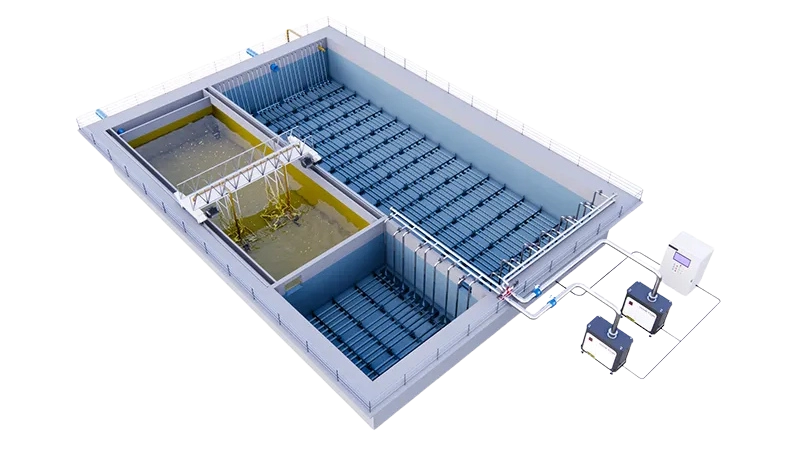
In large wastewater treatment plants, multiple biological tanks often share the same blower system.
Although the overall air supply can meet treatment requirements, different biological zones may require different oxygen levels.
Without accurate airflow distribution and proper aeration adjustment, some areas may receive more air than necessary, while other areas may not receive sufficient oxygen.
This affects both treatment stability and energy efficiency.
2. Traditional Aeration Operation Relies Too Much on Experience
Many wastewater plants still rely on manual adjustment of valves and blower operation.
Operators usually adjust airflow based on:
- Dissolved oxygen readings;
- Effluent quality;
- Daily operating experience.
This approach can work under stable conditions, but it becomes less effective when wastewater characteristics fluctuate.
For large-scale plants, manual adjustment cannot always respond quickly enough to changing biological oxygen demand.
3. Fixed Aeration Strategies Increase Energy Consumption
Aeration is usually one of the largest energy-consuming processes in wastewater treatment.
A common challenge is that operators often supply extra air as a safety margin to ensure biological treatment performance.
However, excessive aeration does not always improve treatment efficiency.
Instead, it may result in:
- Higher blower power consumption;
- Increased operating costs;
- Lower overall system efficiency.
The key challenge is not simply adding more air, but delivering the right amount of oxygen to the right biological zones.
HINKTON Aeration System Optimization Solution
HINKTON does not provide automation software or independent control systems.
Instead, HINKTON focuses on improving the overall aeration system performance through:
- Aeration system assessment;
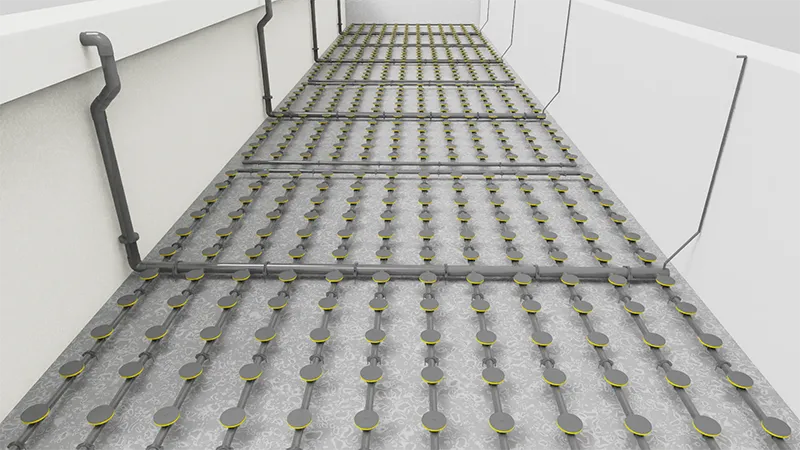
- Fine bubble hose aeration technology;
- Air distribution optimization;
- Process-based aeration design;
- Retrofit improvement solutions.
The objective is to help wastewater plants achieve more efficient oxygen transfer and more stable biological treatment performance.
1. Aeration System Assessment and Performance Analysis
Before optimization, HINKTON reviews the existing aeration system, including:
- Biological tank configuration;
- Existing diffuser arrangement;
- Air piping layout;
- Operating conditions;
- Current aeration performance.
Based on actual plant conditions, HINKTON identifies potential improvement areas and develops a customized aeration strategy.
Instead of applying a standard solution, each project is evaluated according to its own process characteristics.
2. Optimized Air Distribution Using Fine Bubble Hose Aeration
Different biological zones have different oxygen requirements.
HINKTON optimizes airflow distribution according to:
- Aerobic zone oxygen demand;
- Biological reaction requirements;
- Existing tank configuration;
- Actual operating conditions.
By applying high-performance fine bubble hose aeration systems, the solution improves:
- Air distribution uniformity;
- Oxygen transfer efficiency;
- Aeration flexibility.
This allows the biological process to receive more suitable oxygen supply while reducing unnecessary aeration.
3. Improving Aeration Efficiency Without Major Plant Expansion
For existing wastewater treatment plants, upgrading aeration performance is often more practical than building new biological tanks.
HINKTON provides retrofit-oriented solutions to help plants:
- Improve oxygen utilization;
- Reduce excessive airflow;
- Increase biological treatment stability;
- Optimize blower operation.
This approach is especially suitable for plants facing:
- Increased treatment load;
- Limited expansion space;
- Aging aeration systems;
- Rising electricity costs.
Project Evaluation and Performance Improvement
Through wastewater process evaluation based on actual operating conditions, the optimized aeration strategy demonstrated potential improvements in:
More Stable Biological Performance
Improved oxygen distribution helps maintain more balanced biological conditions.
Potential benefits include:
- More stable nitrification;
- Better COD removal performance;
- Improved resistance to load fluctuations.
Reduced Aeration Energy Consumption
By optimizing airflow distribution and improving oxygen transfer efficiency, unnecessary air supply can be reduced.
For large wastewater treatment plants, even a small improvement in aeration efficiency can generate significant long-term energy savings.
Project evaluation showed that optimized aeration operation could achieve approximately 17% reduction in required airflow compared with the previous operating condition.
(Actual savings depend on wastewater characteristics, aeration equipment condition and operating strategy.)
Easier Operation and Maintenance
A well-designed aeration system reduces the need for frequent manual adjustment.
With optimized airflow distribution and improved system performance, operators can achieve:
- More stable operation;
- Reduced adjustment frequency;
- Improved long-term reliability.
Why Aeration System Optimization Matters
As wastewater treatment standards become increasingly demanding, existing plants need to improve efficiency while controlling operating costs.
Aeration optimization provides a practical solution by improving the performance of existing infrastructure.
Instead of increasing equipment capacity or expanding treatment facilities, improving oxygen delivery efficiency can help wastewater plants achieve better performance with lower energy consumption.
HINKTON Aeration System Optimization Capability
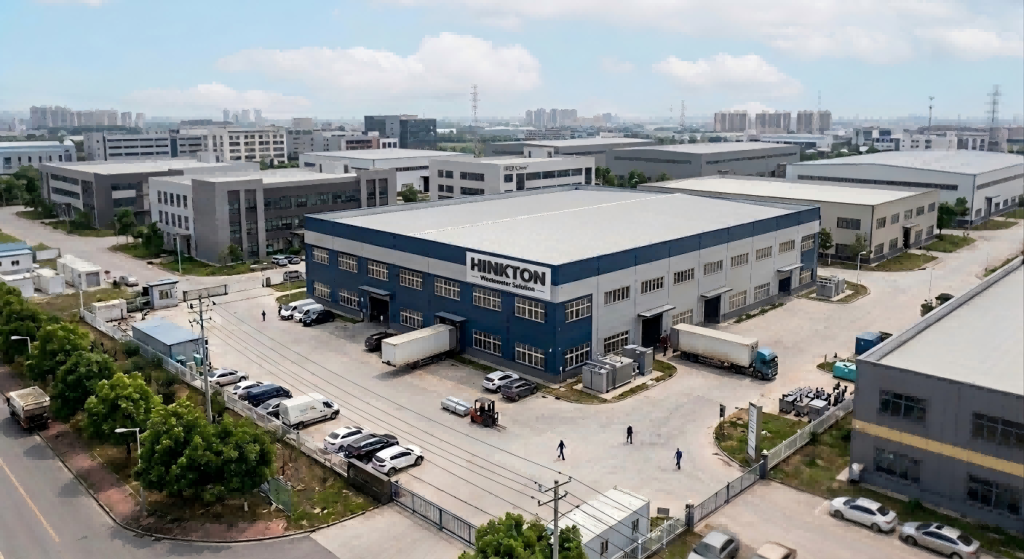
HINKTON specializes in aeration system optimization solutions for municipal and industrial wastewater treatment plants.
Our capabilities include:
- Fine bubble hose aeration systems;
- Disc and tube diffuser solutions;
- Aeration retrofit projects;
- Oxygen transfer improvement;
- Customized aeration system design.
Unlike suppliers that only provide individual aeration products, HINKTON works with customers to analyze existing conditions and develop practical aeration improvement solutions.
Our goal is:
To help wastewater treatment plants achieve stable biological performance with optimized oxygen supply and reduced energy consumption.
Need Aeration System Optimization for Your WWTP?
HINKTON provides technical evaluation and customized aeration retrofit solutions.
Send us your:
- Wastewater treatment capacity;
- Aeration tank dimensions;
- Existing diffuser information;
- Blower operating conditions.
Our technical team will evaluate your aeration system performance.