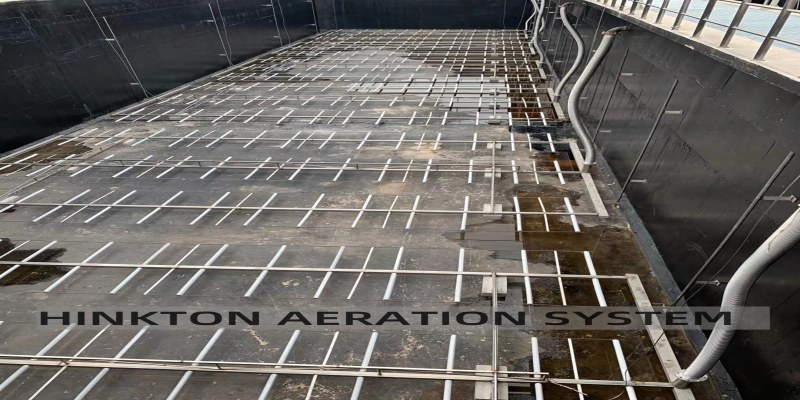
When people think about wastewater treatment, they often focus on pumps, filters or chemicals. In reality, one of the most important parts of a biological treatment plant is the aeration system.
Aeration is not simply about adding air into the water. Its main purpose is to provide enough dissolved oxygen for microorganisms, allowing them to break down organic pollutants efficiently. A well-designed aeration system helps maintain stable biological activity, improves treatment performance and can significantly reduce operating costs.
What Does an Aeration System Do?
In an activated sludge process, microorganisms consume organic matter as their food source.
Like any living organism, they need oxygen to survive and remain active.
Without enough oxygen, the biological process becomes unstable. Dissolved oxygen levels may drop, sludge settling can deteriorate and effluent quality may no longer meet discharge standards.
A properly designed aeration system helps maintain a stable biological environment by:
- Supplying sufficient oxygen
- Keeping sludge well mixed
- Supporting healthy microbial activity
- Maintaining stable treatment performance
Why Aeration Is Also an Energy Issue
Many wastewater treatment plant operators are surprised to learn that aeration is often the largest consumer of electricity in a biological treatment system.
Simply increasing airflow does not always improve treatment performance.
If diffuser layout is poor, airflow is uneven or membranes become fouled, blowers may work harder while oxygen transfer efficiency continues to decline.
A better approach is to improve oxygen transfer rather than simply supplying more air.
This is why modern wastewater treatment projects pay close attention to diffuser selection, airflow distribution and blower matching.
Choosing the Right Diffuser
There is no single diffuser suitable for every wastewater treatment project.
The selection depends on several factors, including:
- Wastewater characteristics
- Biological treatment process
- Tank dimensions
- Water depth
- Oxygen demand
- Maintenance requirements
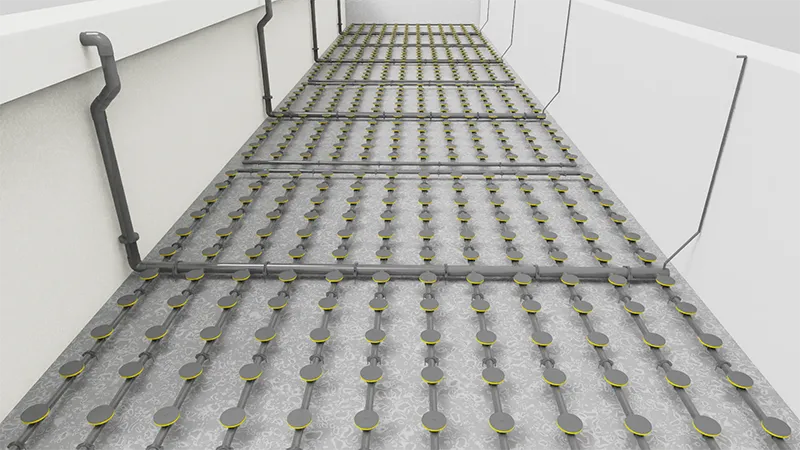
Disc diffusers are commonly used in municipal and industrial wastewater treatment because they provide flexible installation and uniform air distribution.
Tube diffusers are often preferred for long rectangular tanks or applications requiring large aeration coverage.
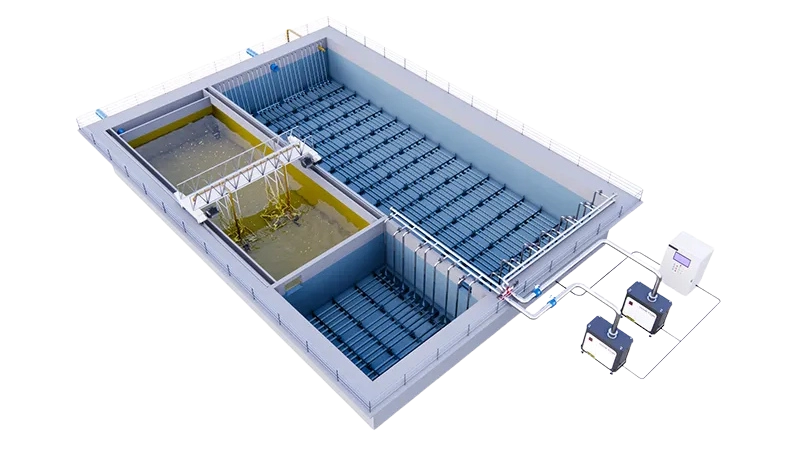
For existing plants where draining the aeration tank is difficult, liftable aeration systems can simplify maintenance while reducing downtime.
Every Wastewater Plant Is Different
Food processing wastewater, textile wastewater, petrochemical wastewater and municipal wastewater all have different characteristics.
Some plants experience large daily flow variations.
Others receive wastewater with high COD concentrations or difficult-to-degrade organic compounds.
Because of these differences, aeration systems should always be designed according to actual operating conditions rather than using a standard equipment configuration.
A successful aeration project is usually the result of balancing oxygen demand, diffuser performance, blower capacity and long-term maintenance.
Looking Beyond the Equipment
Selecting an aeration system is not simply choosing between a disc diffuser or a tube diffuser.
Engineers should also consider:
- Airflow distribution
- Operating pressure
- Oxygen transfer efficiency
- Future maintenance
- Compatibility with existing blowers
- Biological process requirements
A complete aeration solution considers the entire biological treatment system rather than individual products.
How HINKTON Supports Wastewater Treatment Projects
At HINKTON, we work with EPC contractors, engineering companies and wastewater treatment plant operators to provide application-based aeration solutions.
Our support includes:
- Aeration system evaluation
- Diffuser selection
- Airflow layout recommendations
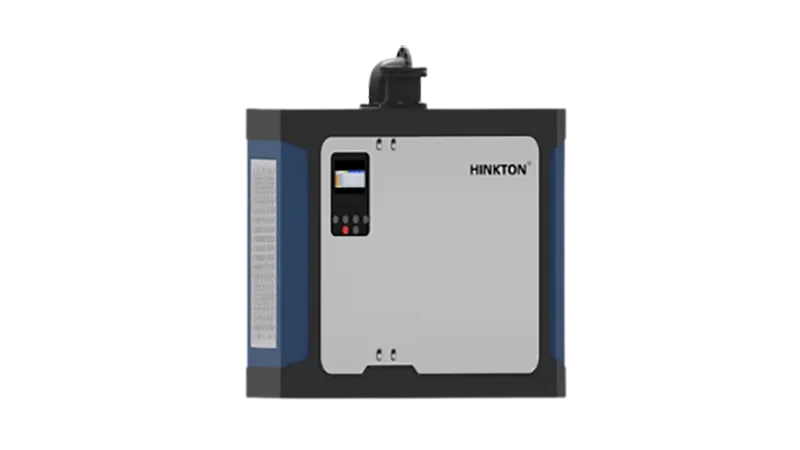
- Blower compatibility review
- Technical documentation
- Support for both new projects and plant upgrades
Whether the project is municipal or industrial wastewater treatment, the goal remains the same: improving oxygen transfer, supporting stable biological treatment and reducing unnecessary energy consumption.
Final Thoughts
Aeration is much more than supplying air.
It is one of the key factors influencing biological treatment performance, operating stability and long-term energy costs.
Choosing the right aeration system at the beginning of a project—or upgrading an aging system when performance declines—can make a significant difference throughout the life of a wastewater treatment plant.
If you are planning a new wastewater treatment project or considering an aeration retrofit, understanding the biological process is the first step toward selecting the most suitable solution.