
Advanced Aeration Solutions for Petrochemical & Refinery Wastewater
Petrochemical, refinery and chemical manufacturing wastewater is among the most complex forms of industrial wastewater.
Depending on production processes and raw materials, the wastewater may contain oil and grease, sulfides, phenolic compounds, ammonia, cyanides, suspended solids and a wide range of aliphatic and aromatic hydrocarbons.
These pollutants can create high oxygen demand, inhibit microbial activity and cause significant fluctuations in biological treatment performance.
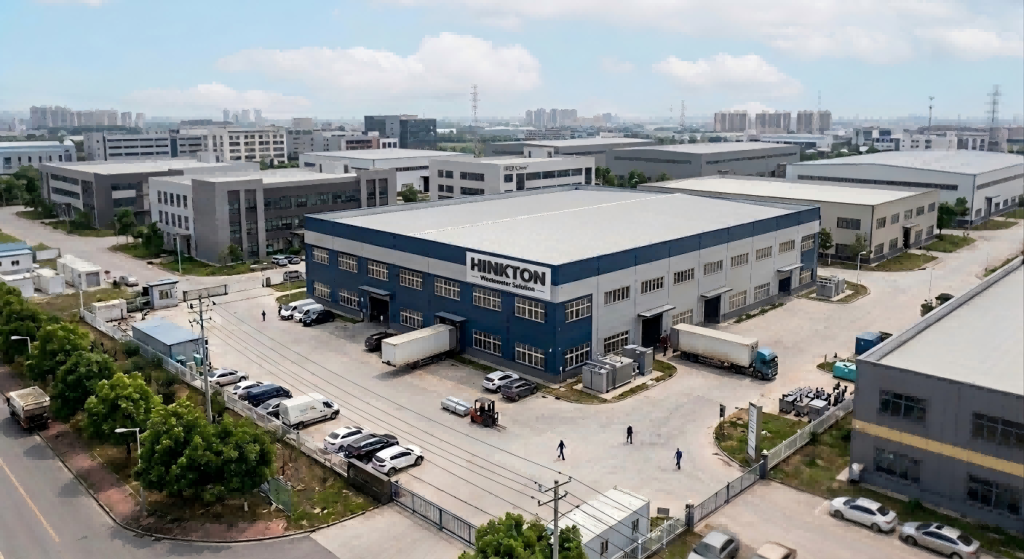
HINKTON provides application-based aeration systems for petrochemical and refinery wastewater treatment plants, helping operators improve oxygen transfer, maintain biological stability and optimize long-term energy performance.
Typical Applications
✓ Petroleum Refining Wastewater
✓ Petrochemical Manufacturing Wastewater
✓ Chemical Manufacturing Wastewater
✓ Chemical Industrial Parks
✓ Refinery Wastewater Reuse Systems
Challenges in Petrochemical & Chemical Wastewater Treatment
Complex and Variable Wastewater Characteristics
Wastewater characteristics can vary significantly between refining, cracking, washing, chemical synthesis and utility operations.
Typical contaminants may include:
- Free, dispersed, emulsified and dissolved oil
- Petroleum hydrocarbons
- Phenolic compounds
- Sulfides
- Ammonia nitrogen
- Cyanides
- Refractory organic compounds
- Suspended solids
- Toxic or inhibitory chemicals
- High and fluctuating COD loads
These compounds may reduce biodegradability, inhibit nitrifying bacteria and create shock loads in downstream biological treatment systems.
Oil Contamination and Pretreatment Requirements
Effective oil removal is a critical prerequisite before biological treatment and fine bubble aeration.
A typical pretreatment train may include:
API or CPI Oil Separation
For the removal of free and separable oil.
Chemical Demulsification
For destabilizing emulsified oil.
Dissolved Air Flotation
For removing dispersed oil, suspended solids and chemical flocs.
Equalization and pH Adjustment
For reducing hydraulic, organic and toxicity fluctuations.
Without effective pretreatment, residual oil and suspended solids may:
- Coat diffuser membranes
- Block fine bubble perforations
- Increase system pressure
- Reduce oxygen transfer efficiency
- Inhibit microbial activity
- Increase cleaning and maintenance requirements
For this reason, HINKTON evaluates upstream pretreatment conditions before recommending a fine bubble aeration system.
Typical Biological Treatment Routes
Anaerobic or Hydrolytic Pretreatment
For wastewater with high COD concentration or limited biodegradability, anaerobic or hydrolytic treatment may be applied before the aerobic stage.
Possible systems include:
- UASB reactors
- Anaerobic filters
- Anaerobic fixed-film reactors
- Hydrolytic acidification tanks
These processes can help:
- Reduce part of the organic load
- Convert complex organics into more biodegradable compounds
- Lower downstream aeration demand
- Improve the stability of the aerobic treatment stage
However, anaerobic treatment alone is generally insufficient for achieving final discharge or reuse requirements.
Aerobic Biological Treatment
The aerobic stage is commonly used for:
- Residual COD removal
- BOD reduction
- Ammonia nitrification
- Oxidation of biodegradable hydrocarbons
- Final biological polishing
Typical aerobic processes include:
- Conventional activated sludge
- A/O and A²/O processes
- Sequencing batch reactors
- Biological contact oxidation
- MBBR and IFAS
- Membrane bioreactors
- Hybrid biological systems
The appropriate process depends on wastewater characteristics, discharge requirements, available tank volume and required operating stability.
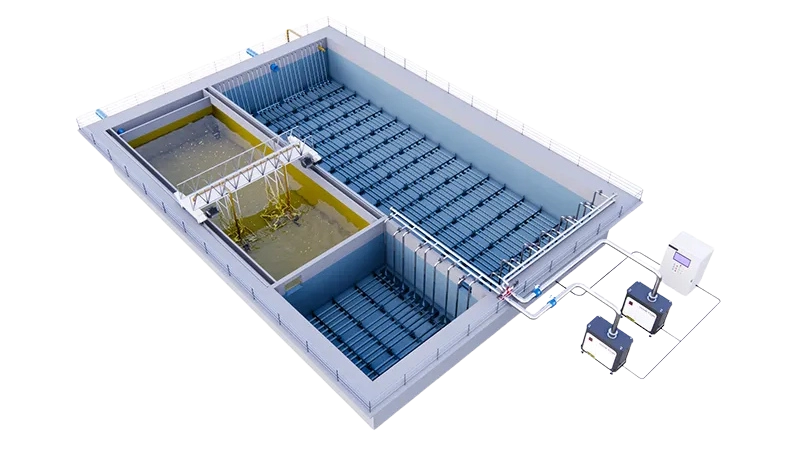
Combined Anaerobic–Aerobic Treatment
Because petrochemical wastewater often contains both high organic loads and difficult-to-degrade compounds, a combined treatment process is frequently more suitable than a single biological stage.
A typical configuration may include:
Oil Separation—–Physicochemical Pretreatment——Hydrolysis or Anaerobic Treatment——Anoxic Treatment—–Aerobic Biological Treatment——–Advanced Treatment and Reuse
The anaerobic or hydrolytic stage reduces part of the organic load, while the aerobic stage provides further COD removal, nitrification and effluent stabilization.
Aeration Requirements in Petrochemical Biological Treatment
1. Reliable Oxygen Supply
Aerobic microorganisms require sufficient dissolved oxygen for:
- Organic matter degradation
- Ammonia nitrification
- Oxidation of biodegradable hydrocarbons
- Recovery from organic or toxicity shock loads
- Stable biological process operation
Insufficient oxygen may lead to:
- Reduced COD removal
- Nitrification failure
- Poor sludge characteristics
- Unstable effluent quality
- Excessive odor generation
HINKTON designs aeration systems according to actual oxygen demand rather than tank dimensions alone.
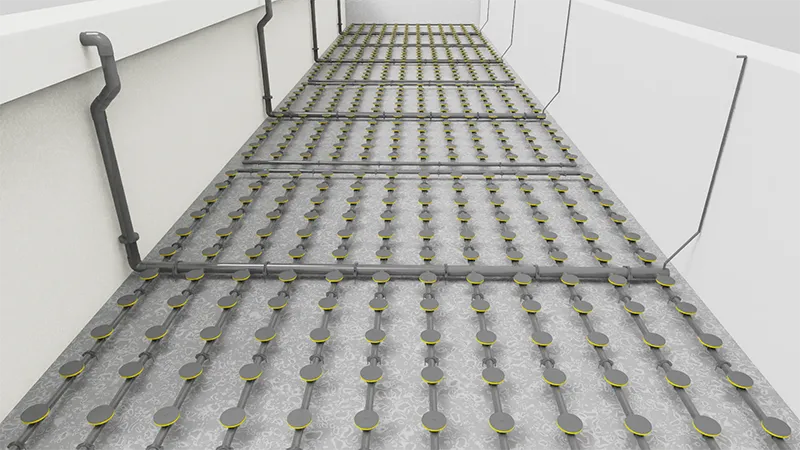
2. Uniform Air Distribution
Large industrial aeration tanks may experience uneven airflow and biological activity.
Aeration design should consider:
- Tank geometry
- Effective water depth
- Process configuration
- Peak and average oxygen demand
- Blower airflow
- Operating pressure
- Diffuser density
- Mixing requirements
- Required turndown range
Optimized diffuser layout helps reduce:
- Dead zones
- Local oxygen deficiency
- Uneven microbial activity
- Excessive airflow
- Unnecessary blower energy consumption
3. Resistance to Load Fluctuations
Petrochemical and chemical wastewater systems may receive sudden changes in:
- COD concentration
- Ammonia loading
- Oil content
- Temperature
- pH
- Toxic compound concentration
The aeration system should therefore provide sufficient operating flexibility to support changing biological oxygen demand.
Variable airflow control, zoned aeration and proper blower turndown can help maintain stable dissolved oxygen without continuous over-aeration.
4. Biomass Retention and Process Stability
Where existing activated sludge systems have limited biomass concentration or poor resistance to shock loads, biological upgrade technologies may be considered.
Possible options include:
- MBBR
- IFAS
- Biological contact oxidation
- DAS™ dense activated sludge technology
These technologies can improve biomass retention and increase biological treatment capacity when properly integrated with the aeration system.
The selection should be based on wastewater biodegradability, carrier loading, oxygen demand, mixing requirements and existing tank conditions.
HINKTON Aeration Solutions
Fine Bubble Disk Diffusers
Suitable for:
- New activated sludge systems
- A/O and A²/O processes
- Large industrial aeration tanks
- MBR and hybrid biological systems
Key advantages:
- High oxygen transfer potential
- Flexible diffuser density
- Multiple membrane material options
- Suitable for zoned aeration design
Fine Bubble Tube Diffusers
Suitable for:
- Long and rectangular aeration tanks
- Large aeration coverage areas
- High oxygen demand applications
- Industrial biological treatment systems
Key advantages:
- Long effective aeration length
- Flexible grid arrangement
- Uniform air distribution
- Reduced number of lateral connections
Retrievable Fine Bubble Aeration Systems
Suitable for existing treatment plants where tank drainage or process shutdown is difficult.
Key benefits:
- Diffuser inspection without full tank drainage
- Easier membrane replacement
- Reduced maintenance interruption
- Suitable for retrofit and phased upgrading
- Improved accessibility in continuous-operation plants
MBBR and IFAS Aeration Support
MBBR and IFAS systems require aeration for both oxygen transfer and carrier movement.
HINKTON can evaluate:
- Carrier filling ratio
- Required mixing intensity
- Oxygen demand
- Tank geometry
- Diffuser arrangement
- Airflow distribution
- Blower operating conditions
The aeration system must be designed to maintain effective carrier circulation while avoiding excessive energy consumption.
Aeration Retrofit and System Optimization
Existing petrochemical wastewater plants may experience:
- Aging or fouled diffusers
- Increasing system pressure
- Reduced oxygen transfer efficiency
- Uneven dissolved oxygen
- Rising blower energy consumption
- Higher wastewater loading
- Insufficient nitrification capacity
- Frequent maintenance requirements
HINKTON supports retrofit projects through the following process.
Existing System Evaluation
Review of:
- Wastewater characteristics
- Pretreatment performance
- Biological process
- Existing diffuser type and condition
- Blower airflow and pressure
- Tank dimensions and water depth
- Current dissolved oxygen profile
- Operating energy consumption
Aeration System Optimization
Engineering support may include:
- Oxygen demand review
- Diffuser selection
- Airflow calculation
- Pressure-loss evaluation
- Diffuser layout optimization
- Aeration zoning
- Existing blower compatibility review
- Retrofit configuration recommendations
Technical Documentation
HINKTON can provide:
- Aeration layout drawings
- Airflow distribution recommendations
- Product specifications
- Technical data sheets
- Installation guidance
- Project communication support
Typical Treatment Applications
Petroleum Refining Wastewater
Common Challenges
- Free and emulsified oil
- Sulfides and phenolic compounds
- Ammonia nitrogen
- Variable hydrocarbon loading
- Fluctuating flow and wastewater quality
HINKTON Solution Focus
- Aeration system design after effective oil removal
- Stable oxygen supply for biological oxidation
- Flexible airflow under changing loads
- Retrofit of aging aeration systems
- Improved maintenance accessibility
Chemical Manufacturing Wastewater
Common Challenges
- Complex organic compounds
- Toxicity fluctuations
- Poor or variable biodegradability
- High salinity in some applications
- Production-related shock loads
HINKTON Solution Focus
- Application-specific diffuser selection
- Uniform aeration and dissolved oxygen control
- Biological process stability
- Integration with MBBR, IFAS or other upgrade technologies
Chemical Industrial Parks
Common Challenges
- Mixed wastewater sources
- Rapidly changing influent characteristics
- Multiple production industries
- Uncertain peak organic loading
- Changing treatment requirements
HINKTON Solution Focus
- Flexible aeration configurations
- Zoned airflow control
- Expandable system design
- Energy-efficient long-term operation
- Reliable retrofit support
Advanced Treatment and Water Reuse
Where treated wastewater must be reused, the biological stage may be followed by advanced treatment such as:
Coagulation and filtration
Multimedia filtration
Ozone oxidation
Activated carbon
Ultrafiltration
Reverse osmosis
Stable biological treatment is important because excessive residual COD, oil or suspended solids can increase fouling and operating pressure in downstream membrane systems.
An efficient aeration system therefore contributes not only to biological treatment performance but also to the reliability of the overall water reuse process.
Why Choose HINKTON
Application-Based Engineering
HINKTON evaluates:
- Wastewater characteristics
- Oil and solids pretreatment
- Treatment capacity
- Biological process
- Tank dimensions
- Water depth
- Oxygen demand
- Existing blower conditions
- Maintenance requirements
before recommending an aeration solution.
Industrial Aeration Experience
Our solutions support:
- Petrochemical wastewater
- Chemical manufacturing wastewater
- Food and beverage wastewater
- Pulp and paper wastewater
- Municipal wastewater
- New construction and retrofit projects
Complete Project Support
From initial evaluation to equipment delivery, HINKTON provides:
- Product selection
- Technical consultation
- Oxygen and airflow review
- Aeration layout support
- Technical documentation
- Installation guidance
- Project coordination
Optimize Your Petrochemical Wastewater Aeration System
Whether upgrading an existing refinery wastewater treatment plant or designing a new biological treatment system, HINKTON provides aeration solutions tailored to actual wastewater and operating conditions.
Share the following information with our technical team:
✓ Wastewater source and characteristics
✓ Design and peak treatment capacity
✓ Influent COD and ammonia concentration
✓ Existing pretreatment process
✓ Biological treatment process
✓ Tank dimensions and water depth
✓ Existing aeration and blower information
✓ Required discharge or reuse standard
Request Technical Evaluation